
Why Your Roof Has Black Streaks (and What Actually Removes Them)
May 27, 2026 · 4 min read · by Asher Clark
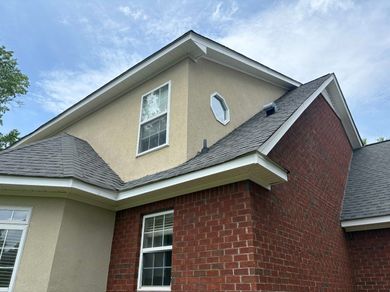
Those stains are not dirt and they are not asphalt bleeding through. They are a living organism feeding on your shingles.
It has a name: Gloeocapsa magma
The black streaking on asphalt roofs across the CSRA is a blue-green algae called Gloeocapsa magma. It thrives in warm, humid climates and feeds on the limestone filler manufacturers mix into shingles.
It spreads by airborne spores, which is why it usually appears on the north-facing slope first, then on your neighbor's roof next.
Why it is worse than cosmetic
The dark colonies absorb heat, which raises attic temperatures and accelerates shingle aging. The algae also holds moisture against the roof surface and progressively loosens granules, shortening the service life of the roof.
Realtors and appraisers notice it too — a heavily streaked roof reads as a roof near the end of its life even when it has a decade left.
What does not work
Pressure washing removes streaks and granules together. Walking a hot roof with a scrub brush cracks shingles. Zinc or copper strips at the ridge help slow future regrowth slightly but do nothing about staining that is already there.
What does work
A soft wash with a shingle-safe solution applied at low pressure. It kills the organism outright, and the dead growth releases and rinses off with rainfall over the following weeks. Done properly it is the method shingle manufacturers themselves recommend.
In the CSRA, most roofs need this every three to five years, and sooner if they sit under pines.
Want this handled for you?
FloPro Pressure Cleaning serves the CSRA from Appling, GA. Call (706) 955-2425 or request a free quote.